Profile of Panjab University
Brief History and Present Infrastructure
One of the oldest Universities in India, the Panjab University (PU) initiated at Lahore in 1882, has a
long tradition of pursuing excellence in teaching and research in science and technology, humanities,
social sciences, performing arts and sports. The University supports excellence and innovation in
academic programmes, promotes excellence in research, scholarship and teaching.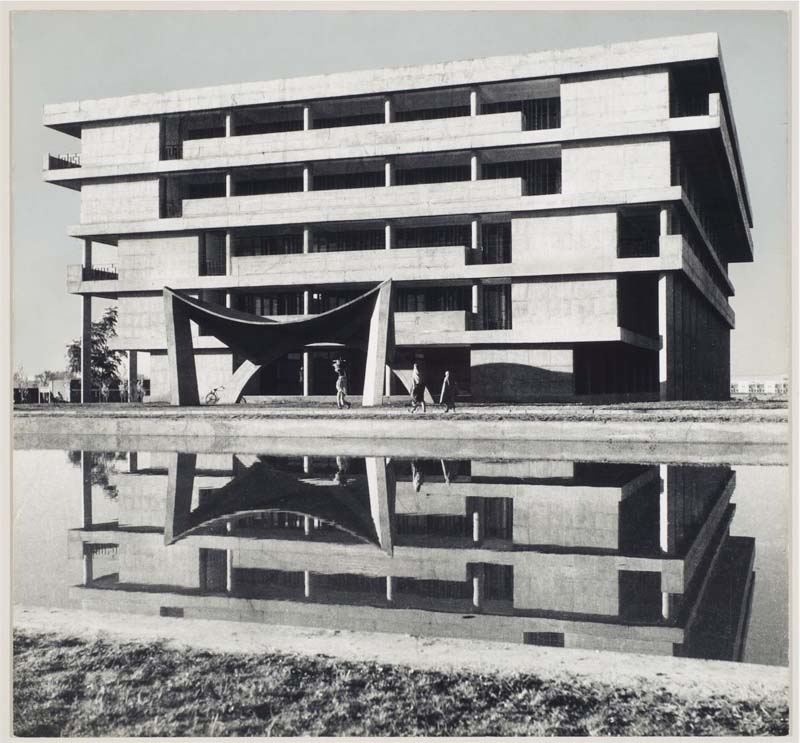 The University is committed to attract and support the
best students and faculty, who excel at teaching and research. In independent India, Panjab University
with its Campus at Chandigarh and nearly 202 affiliated colleges in Punjab state and Chandigarh U.T., has
served various societal needs with distinction. The glorious traditions of the University established
during the period of more than 140 years of its long service to the nation since its inception are a
source of inspiration for the present generation of faculty members and students. By virtue of its
history, experience, achievements and philosophy, the Panjab University has a national character and it
enjoys an international stature drawing both faculty and students from all over the country and different
parts of the globe. Its faculty includes some of the most distinguished scientists and academicians. It
continues to attract celebrated scholars at the campus. Over the years, the reputation of the Panjab
University has grown to emerge as an institution at the pinnacle in innovative teaching, research and
community outreach.
The University is committed to attract and support the
best students and faculty, who excel at teaching and research. In independent India, Panjab University
with its Campus at Chandigarh and nearly 202 affiliated colleges in Punjab state and Chandigarh U.T., has
served various societal needs with distinction. The glorious traditions of the University established
during the period of more than 140 years of its long service to the nation since its inception are a
source of inspiration for the present generation of faculty members and students. By virtue of its
history, experience, achievements and philosophy, the Panjab University has a national character and it
enjoys an international stature drawing both faculty and students from all over the country and different
parts of the globe. Its faculty includes some of the most distinguished scientists and academicians. It
continues to attract celebrated scholars at the campus. Over the years, the reputation of the Panjab
University has grown to emerge as an institution at the pinnacle in innovative teaching, research and
community outreach.
In Chandigarh, the newly built capital of Punjab, a beautiful red sandstone campus was designed for the
Panjab University by Pierre Jeanneret under the general guidance of Le Corbusier. Panjab University moved
here during 1958-1960. Till the re-organisation of Punjab in 1966, the University had its regional
centres at Rohtak, Shimla and Jalandhar and its affiliated colleges were located in the States of Punjab,
Haryana and Himachal Pradesh and the Union Territory of Chandigarh. With the re-organization of Punjab,
the University became an Inter-State Body Corporate catering to the newly organized States of Haryana,
Himachal Pradesh and Punjab and the Union Territory of Chandigarh. Gradually, the colleges of Himachal
and Haryana were affiliated to the Universities in the respective states and the Panjab University was
left with the affiliated colleges in the Union Territory of Chandigarh and some parts of Punjab. The
Panjab University Campus at Chandigarh accommodates seventy four teaching and research
departments/institutes/centres besides six independent Chairs for research. Furthermore, the university
has 202 affiliated and 6 Constituent Colleges spread over Punjab and Chandigarh besides Regional Centres
at Muktsar, Ludhiana, Hoshiarpur and Kauni. In addition, there is the Vishveshavaranand Vishwa Bandhu
Institute of Sanskrit and Indological Studies at Hoshiarpur.
The Campus
Panjab University is located in Sector 14 and Sector 25 of Chandigarh, spreading across an area of almost
550 acres.
The layout of two campuses of the University has been conceived to meet the academic,
administrative, sports/recreational, residential and other requirements of a growing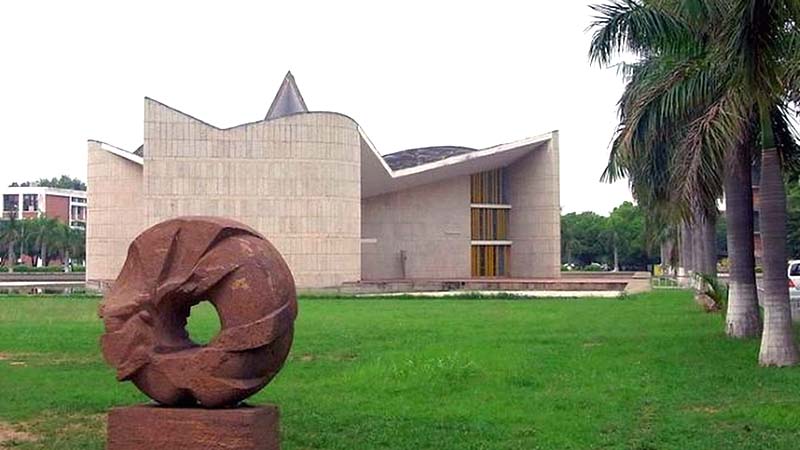 University. To make it self-contained, infrastructural
facilities like its own Shopping Centre, Health Centre, Bank, Post office, Swimming Pool, Gymnasium,
Sports Grounds, Botanical Gardens, well maintained parks, Open Air Theatre, Guest Houses, Faculty House,
Seminar Complexes, Alumni House, Community Centre and a school, have been provided. Besides these
facilities, the University Campus has 8 hostels for boys, 10 hostels for girls, a Working Women Hostel
and International Hostel and 2 sports hostels.
University. To make it self-contained, infrastructural
facilities like its own Shopping Centre, Health Centre, Bank, Post office, Swimming Pool, Gymnasium,
Sports Grounds, Botanical Gardens, well maintained parks, Open Air Theatre, Guest Houses, Faculty House,
Seminar Complexes, Alumni House, Community Centre and a school, have been provided. Besides these
facilities, the University Campus has 8 hostels for boys, 10 hostels for girls, a Working Women Hostel
and International Hostel and 2 sports hostels.
A cluster of prominent buildings like the Gandhi Bhawan, the Fine Arts Museum, the University
Library and the Student Centre form the hub of social interaction. The three-winged structure of the
Gandhi Bhawan, considered the pride of the University, is its most artistic building. The Fine Arts
Museum, with its series of small galleries arranged around a courtyard, each gallery having a hyperbolic
paraboloid roof (umbrella shaped), is not only an architectural but a structural marvel as well. The
University Library, another key building, in the Sector 14 Campus is an RCC framed structure with red
sandstone veneers. The Student Centre, with its circular base and a ramp pulsating around its cylindrical
body, is another landmark building.
Teaching Departments/Centres
The academic institutes on the campus and four Regional Centres are grouped under the Faculties of Arts,
Science, Languages, Law, Education and Fine Arts, Business Management and Commerce, Engineering and
Technology, Medical Sciences, Pharmaceutical Sciences and Dairying, Animal Husbandry and Agriculture.
Most of the departments have their own specialized libraries, and the working period runs for at least
180 days in a year.
The University School of Open Learning, a multi-disciplinary department, caters to more than
14000 distance learners and offers over 25 traditional and job oriented courses.
Centres of Excellence
Departmental Research Support (SAP/DRS), Centre for Advanced Study (CAS), Funds for Improvement of Science and Technology (FIST) and the Department of Special Assistance (DSA). The Departments covered under various UGC and DST Programmes are:
| Centre for Advanced Study (CAS) | Departments of Anthropology, Chemistry, Geography, Geology, Mathematics, Physics, Political Science, Sociology, University Institute of Pharmaceutical Science and Zoology |
| Departmental Research Support (DRS) | Departments of Biotechnology, Botany, Economics, English and Cultural Studies, University Business School, SSB University Institute of Chemical Engineering & Technology and the University Institute of Engineering & Technology |
| Department of Special Assistance (DSA) | Department of Biochemistry, Statistics, Biophysics |
| Funds for Improvement of Science & Technology (FIST) | Departments of Anthropology, Biophysics, Biotechnology, Chemistry, Physics, University Institute of Pharmaceutical Sciences and Zoology |
| DBT - Skill Vigyan | Department of Biochemistry |
| DBT - BUILDER | Department of Biochemistry |
| Design Innovation Centre | University Institute of Engineering & Technology |
| DST PURSE | Department of Geology, Mathematics |
| DST-CPR | Department of Biophysics |
| Human Resource Development Centre | Human Resource Development Centre |
| Networking Resource Centre | University Institute of Pharmaceutical Sciences |
| RUSA | Department of Geology, Botany, Zoology, Anthropology, Geography |
| Technical Education Quality Improvement Programme - III (TEQIP) | University Institute of Engineering & Technology, SSB University Institute of Chemical Engineering & Technology |
| UGC XIIth PLAN Scheme for Women's Studies | Department cum Centre for Women Studies & Development |
University with Potential for Excellence
The University has been recognized by the UGC as the "University with Potential for Excellence in Biomedical Sciences" with facilities for Stem Cell Research and Drug Development. During the 11th Five Year Plan (2007-2012), it was awarded the following two Centres of Excellence by the UGC under the Scheme of Centre with Potential for Excellence in a Particular Area (CPEPA):
- Centre of Excellence in "Application of Nano Materials, Nano Particles and Nano Composites", with a grant of Rs. 3.55 crore and
- Centre of Excellence in "Cultural Fixation on Honor: A Gender Audit of Punjab and Haryana", with a grant of Rs. 1.85 crore
Research Initiatives
- The University is participating in various prestigious International High Energy Research Programmes
at Fermilab (USA), KEK (Japan) and CERN (Switzerland). At present, the University is involved in a big
way in CMS and ALICE Experiments at CERN (European Organization for Nuclear Research) Switzerland and
Neutrino Programme at Fermilab, USA. The CMS (Compact Muon Solenoid) project at the Large Hadron
Collider is for the discovery of Higgs Boson and other new particles. Under such International
Research programs, the University had earlier been involved in the Top Quark Discovery (1995) and
CP-violation discovery (2001).
- International Collaborations:
The University recently signed MoUs with University of Nottingham (UK), University of Birmingham (UK), Nottingham Trent University (UK) and University of Western Sydney (Australia). PU also has collaborations with National Science Technology and Development Agency, Thailand; University of Missouri, USA and Universidade de Aveiro, Portugal; International Crops Research Institute for Semi-Arid Tropics (ICRISAT), Hyderabad; International Centre for Agricultural Research in Dry Areas (ICARDA), Morocco for a joint collaborative project funded by the Consultative group on International Agricultural Research (CGIAR) consortium, funded by organisations such as UNDP and FAO, USA, UK, and Germany; International Centre for Agricultural Research in Dry Areas (ICARDA), Morocco; World Vegetable Research Centre, Taiwan through its South Asia Centre at Hyderabad and Baylor Medical centre, Dallas, U.S.A. - National collaborations:
The University has various prestigious collaborations with a number of national institutes like Indian Agricultural Research Institute, Delhi; GB Pant University of Agriculture and Technology, Pantnagar; Himalayan Forest Research Institute, Shimla; IIT, Roorkee; PGIMER, Chandigarh; Nuclear Science, Delhi; IMTECH; CSIO, Chandigarh; Institute of Nuclear Medicine and Allied Sciences (INMAS), New Delhi; Jamia Hamdard University, Delhi; Atomic Energy Regulatory Board of India, Mumbai; Central University, Hyderabad; Agriculture University, Palampur; Inter University Consortium (Kolkata & Bhubaneswar).
- International Collaborations:
- Prominent Research Funding: The University is getting liberal grants for pursuing research from various national & international agencies. Recently, the Department of Science and Technology, Government of India, selected the Panjab University as one among the top fourteen universities of India for further funding under the Promotion of University Research and Scientific Excellence (DST-PURSE) programme. Under this prestigious scheme, the university has received Rs. 34.8 crore for the development of research infrastructure. To participate in the CMS project, the Department of Science and Technology and the Department of Atomic Energy have provided Rs. 19 crore for the Twelfth Five-Year Plan.
Internet And Communication Facilities
The Computer Centre of the University provides Fibre Optic high speed network connectivity through
Gigabit technology to all the Departments, Centres, Hostels and Administrative Block. The Computer Centre
is connected through National Knowledge Network (NKN) and the National Mission of Education through
Information and Communication Technology (NMEICT) networks. All the hostels and Academic areas of Sector
14 and Sector 25 are covered by Wi-Fi and students and staff can access it seamlessly. The Computer
Centre is hosting all the servers (like DNS, Mail, Web Server) in its data centre and providing
facilities like online admissions and entrance tests.
Other Facilitating Centres
Regional Sophisticated Instrumentation Centre, Energy Research Centre, Centre for the Study of Social
Exclusion and Inclusive Policy, Centre for IAS & Other Competitive Examinations, Centre for Industry
Institute Partnership Programme, Centre for Medical Physics, Centre for Study of Mid-West & Central Asia,
Centre for the Study of Geopolitics, and Centre for Swami Vivekananda Studies are other facilitating
centres providing services at the University.
The AC Joshi Library is housed in a centrally-located and fully air-conditioned 5 storey building
with a seating capacity of 500 readers. It has over 7 lakh publications and a prized collection of 1490
manuscripts. It is fully computerized and provides access to more than 7500 online full text journals
through UGC- INFONET. It is one of the six National Document Delivery Centres of INFLIBNET for data
information distribution. Radio Frequency Identification Technology in the Library benefits the readers
by permitting self-issue and returns of books 24x7. Recently many new services have been introduced such
as Online Membership, SMS service, Digital signage system, etc. The outer reading hall is open twenty
four hours. For visually impaired students, the library provides JAWS software to access information
displayed on the screen via text-to-speech and Zoom-Ex which turns computer into an accessible scanner,
reader and magnifier.
The University has its own Website to host date-sheets, results, examination forms and online
entrance and admission forms for the convenience of students/public.
PU Radio
The University has its own community radio station, Radio Jyotirgamaya 91.2, which acts as a unifying agent amongst the university faculty, students and also the community. The radio programmes can be heard over a range of 10 kilometres.
Hostels
There are 18 hostels (8 for boys and 10 for girls) to accommodate nearly 6700 students. There also exists one Working Women hostel with a capacity to accommodate 70 residents and one International Hostel with world class facilities.
Health
Bhai Ghanaiya Ji (BGJ) Institute of Health caters to the medical needs of about 40,000 employees and
their dependents, students of all the departments, all boys and girls residing in hostels, daily wagers,
contractual employees, mess and canteen workers. A round-the-clock emergency service, along with 24x7
ambulance, is available. The Institute has a fully equipped modern clinical laboratory, latest
computerized ECG machine, a fully computerized digital 500mA mammographic compatible CR unit and an X-Ray
machine. BGJ Institute of Health is manned by a general physician and specialists from different
faculties.